Freya Ludwig · 2 September 2026
The Slateford Council has voted to reject a controversial plan for a new bypass road following widespread protests from local residents. The decision came during a packed council meeting last night, where councillors cited concerns over costs and environmental impact as key factors in their unanimous vote against the scheme.
Overview of the Rejected Proposal
The bypass plan aimed to construct a 5-mile road skirting the western edge of Slateford, intended to alleviate congestion in the town centre. Proponents argued it would reduce travel times for commuters and improve air quality in residential areas by diverting heavy traffic. The estimated cost was £45 million, funded partly by central government grants and local taxes. Engineering reports suggested the route would pass through several greenfield sites, requiring the acquisition of farmland and potential disruption to local wildlife habitats. Despite these details, the council ultimately deemed the project unfeasible at this time due to escalating material costs and uncertain long-term benefits. Additional assessments revealed potential flooding risks along parts of the proposed alignment, further complicating approval prospects.
Public Protests and Council Deliberations
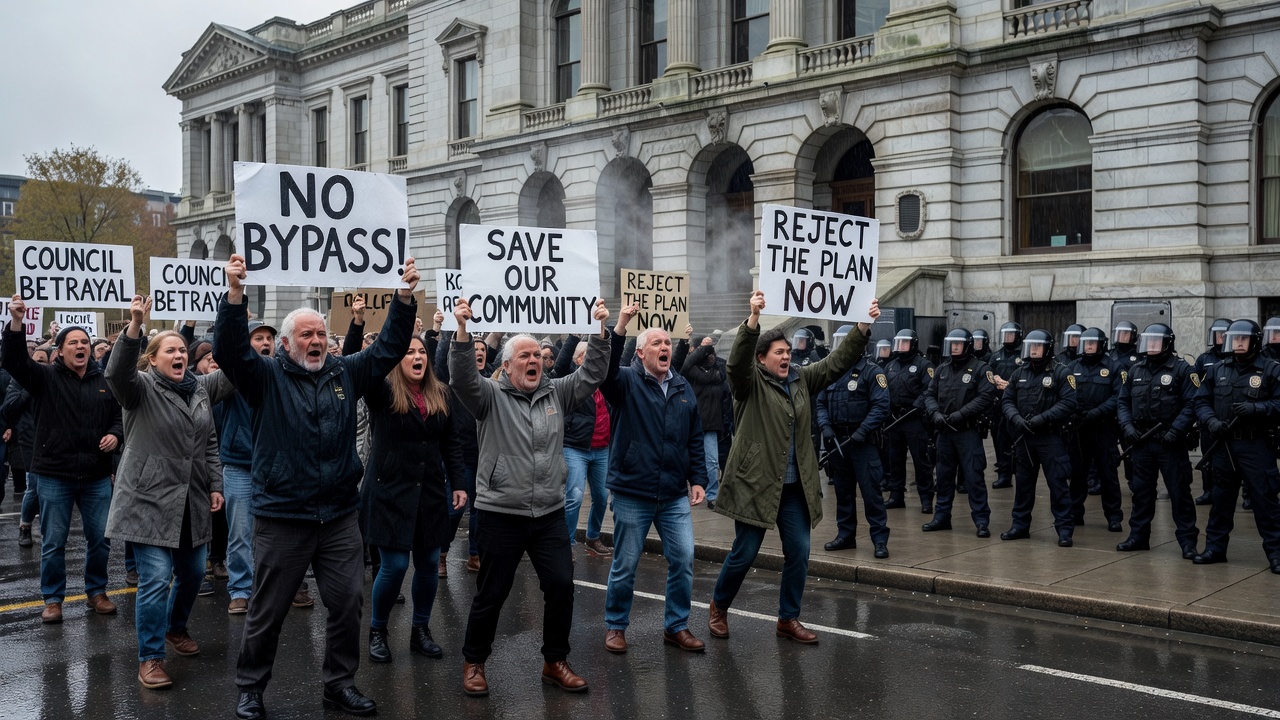
Protests against the bypass have been ongoing for several months, with hundreds of residents gathering outside the council chambers on multiple occasions. Campaigners highlighted the loss of valuable green spaces and questioned the necessity of the road given recent improvements in public transport options. Environmental groups submitted petitions with over 2,000 signatures opposing the development. During deliberations, several councillors expressed reservations about the financial burden on taxpayers, especially amid rising inflation and budget constraints. Alternatives such as enhanced bus services and cycle lanes were proposed as more sustainable solutions. The mayor stated that while traffic issues remain a priority, the council would explore less invasive measures. Community leaders welcomed the rejection but urged continued dialogue on transport improvements. Further consultations are planned for the coming months to address ongoing concerns about local infrastructure. Residents expressed relief at the outcome, though some worry about future developments. Traffic surveys will continue to monitor the situation closely. The council has allocated funds for a new study on sustainable transport options to be completed by next year.