
Jakob Klein · 3 September 2026
How Weather Events Are Reshaping Long-Term Infrastructure Decisions in Outlying Districts
Weather patterns have intensified across many regions in recent years, and planners in outlying districts now factor these shifts directly into multi-decade infrastructure projects, from road networks to water systems. Data from the National Oceanic and Atmospheric Administration shows rising instances of extreme rainfall and prolonged heatwaves that affect remote areas more severely because of limited drainage and older materials. Those responsible for long-term budgets have adjusted designs so that new bridges sit higher above flood lines while roads incorporate permeable surfaces that reduce runoff during heavy downpours.
Recent Weather Trends Affecting Remote Areas
Outlying districts have recorded more frequent storm surges and flash floods since the early 2020s, while temperature spikes have accelerated pavement degradation on lightly trafficked routes. Researchers at Environment and Climate Change Canada documented a 30 percent increase in days above 30 degrees Celsius in northern rural zones between 2020 and 2025, which shortens the lifespan of asphalt by roughly one-fifth. These conditions force engineers to select different aggregates and additives that withstand repeated freeze-thaw cycles as well as sudden heat loads, and the same reports note that similar patterns appear in parts of Australia where the Bureau of Meteorology tracks comparable rainfall variability.
Planners review historical records alongside updated climate projections before committing funds, and this process now includes scenarios that assume stronger storms will recur within the next decade. In September 2026 several district councils plan to release revised capital plans that embed these assumptions, shifting resources away from traditional concrete pours toward modular components that can be replaced quickly after damage.
Adjustments in Road and Bridge Construction
Highway departments in sparsely populated counties have begun elevating new segments of pavement by at least one meter in flood-prone valleys, a change driven by insurance data that shows repeated closures costing millions in lost freight movement. Engineers also install sensors along embankments so maintenance crews receive alerts when soil saturation reaches critical thresholds, and this real-time monitoring replaces scheduled inspections that once occurred every six months. Case studies from Canadian provinces indicate that such systems cut emergency repair costs by 22 percent during the 2024 spring thaw season.
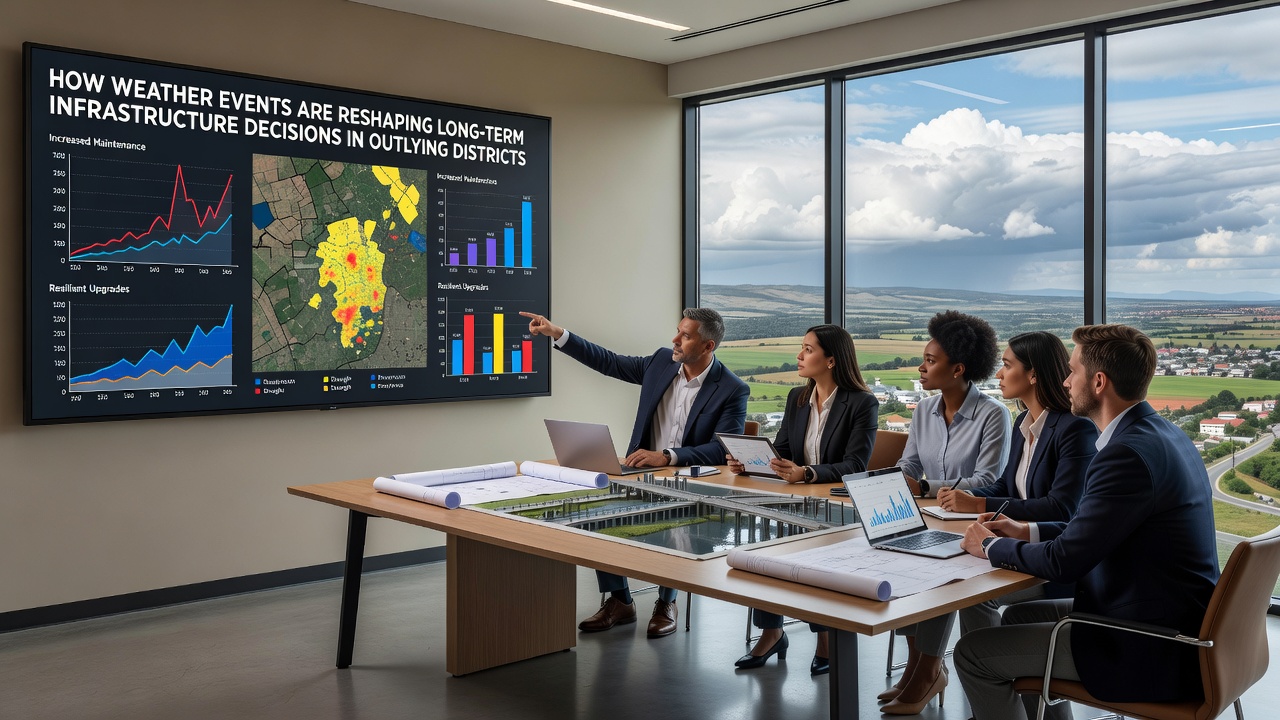
Bridge replacements now use corrosion-resistant steel and wider abutments that accommodate higher water volumes, while older wooden crossings are phased out entirely. These upgrades appear in project bids released during 2025 and will continue through the following year as agencies align spending with resilience standards issued by multiple national bodies.
Water Systems and Utility Networks Under Review
Water treatment plants serving outlying communities face pressure from both drought and sudden deluges that overwhelm intake pipes. Operators have started installing variable-speed pumps that adjust to fluctuating reservoir levels, and they pair these devices with underground storage tanks sized for extended dry periods. European Union infrastructure reports compiled in 2025 highlight similar retrofits in Scandinavian rural districts where permafrost thaw has altered groundwater flows. Utilities also bury power lines deeper or route them along less exposed corridors to limit outages during high winds, and cost-benefit analyses show these moves reduce customer interruptions by measurable margins over twenty-year horizons.
Funding Mechanisms and Policy Shifts
Government grants increasingly require applicants to demonstrate how proposed works will perform under projected 2050 climate conditions, and this requirement appears in guidance from agencies across North America and Oceania. Districts that fail to include such modeling receive lower priority for matching funds, which pushes local leaders to hire specialized consultants who run scenario simulations before design work begins. Procurement documents now list performance metrics tied to storm intensity rather than average weather statistics, and contractors must supply warranties that cover accelerated wear from extreme events.
Conclusion
Long-term infrastructure choices in outlying districts now rest on datasets that integrate recent weather records with forward-looking models, and this integration produces measurable changes in material selection, elevation standards, and monitoring technology. Agencies continue to refine these approaches as new measurements arrive, while coordination among national meteorological services supplies the consistent baseline information required for cross-border planning. The result is a gradual but steady evolution in how remote communities protect essential services against shifting environmental pressures.